


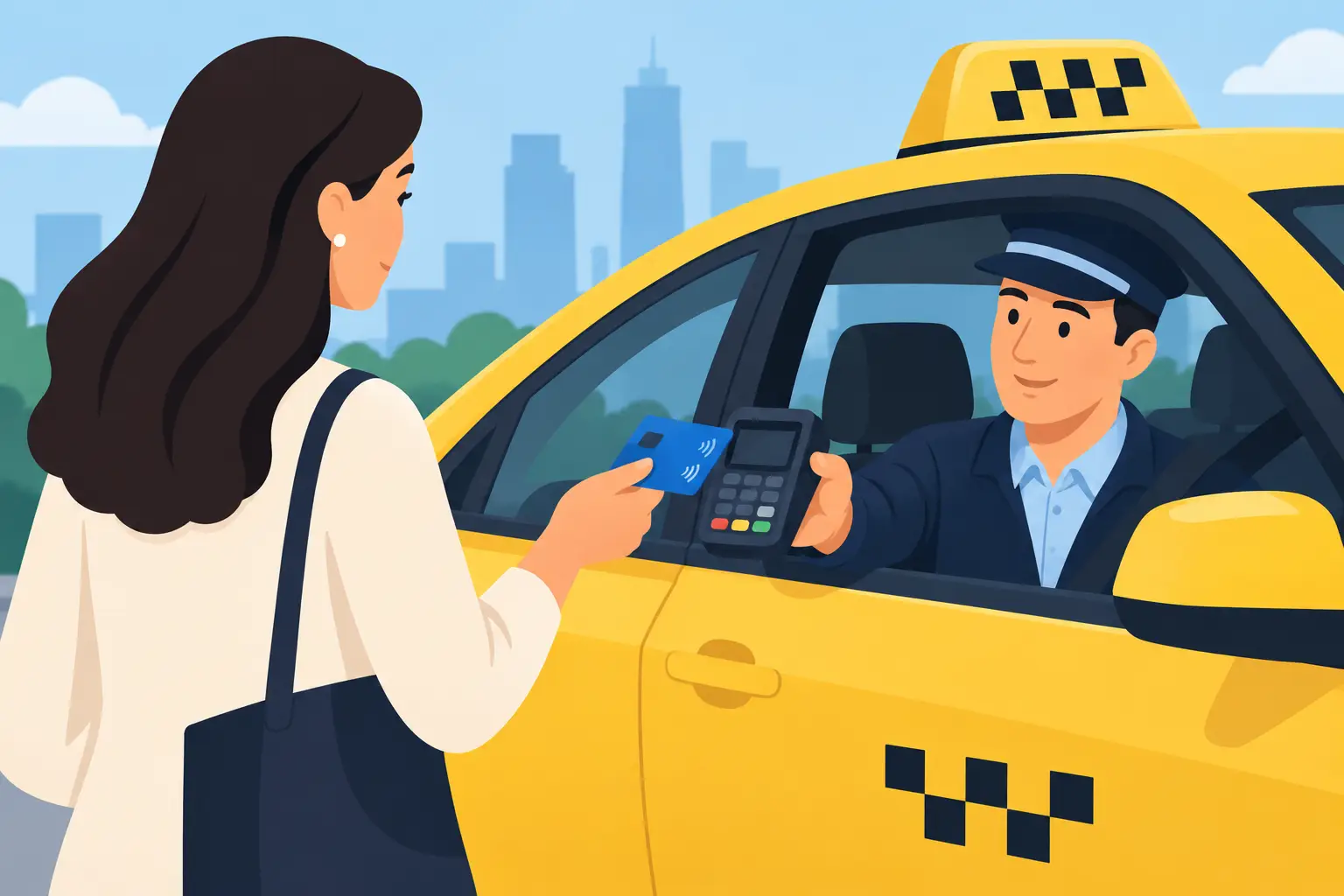
A taxi arriving for an early Stansted Airport run is not the moment to find out that the driver only takes cash. Whether you are heading home after dinner, travelling for work or managing luggage and children on a family journey, asking “do taxis accept card payments?” before you book can make the whole trip easier.
The short answer is: many taxis and private-hire firms do accept cards, but you should never assume every vehicle, booking type or driver uses the same payment arrangement. A quick check when booking gives you certainty on the fare, payment method and collection details, so you can travel comfortably without a last-minute search for a cash machine.
Do taxis accept card payments in the UK?
Card payments are common across UK taxi and private-hire services. Contactless debit and credit cards are widely used, and many operators can also take payment through a booking system, payment link or invoice. Mobile wallets may be accepted too, although this depends on the card terminal and the provider’s own process.
That said, there is no single rule that applies to every taxi. A licensed black cab in a city, a local pre-booked car, an independent driver and a minibus firm may all handle payments differently. Some accept cards in every vehicle. Others take card payments only for bookings made in advance, while a few may still prefer cash for a rank pickup or short local trip.
For passengers, the practical point is simple: confirm payment before the journey begins. It is a small question that avoids an awkward discussion when you have reached your destination.
Why payment options can differ
Private-hire journeys are often arranged differently from taxis hailed on the street. When you pre-book, the operator can confirm the vehicle, journey price and payment method in advance. This is especially useful for airport transfers, return travel, business trips and group bookings where timing matters.
A driver may not have a working card terminal if mobile signal is poor, the device battery has failed or a technical issue interrupts the connection. These situations are unusual, but they are another reason not to rely on assumptions. If you need to pay by card, make that clear when you book rather than waiting until the end of the ride.
The type of journey can matter too. A local trip booked at short notice may be paid directly to the driver, whereas a pre-arranged airport transfer may be paid online or by card over the phone. Some firms also ask for advance payment or a deposit for longer journeys, early-morning collections or larger vehicles.
What to ask before you book
You do not need a long conversation. Tell the operator where you are travelling from and to, the date and time, how many passengers are travelling, and that you would like to pay by card. They should then be able to explain whether payment is taken when you book, in the vehicle or after the journey.
It is also sensible to ask whether contactless payment is available if that is your preference. Contactless limits can vary depending on your bank and card, so for a higher-value airport or minibus journey, a chip-and-PIN payment, mobile wallet or pre-payment option may be more suitable.
If a fare has been agreed in advance, ask whether card charges are included in that amount. Reputable operators should communicate any extra fee clearly before you confirm the booking. Knowing the full cost beforehand is particularly helpful when planning a family budget or claiming business travel expenses.
For a return trip, check both legs of the journey. The outward journey may be pre-paid, while the return may be due to the driver. Confirming this in advance means you are not left wondering how payment will work when you are tired after a flight.
Card, cash or pre-payment: which is best?
There is no one payment method that suits every passenger. Card payment is convenient because you do not need to carry cash, and it creates a clear record of the transaction. That can be useful for work travel, expense claims and keeping track of holiday costs.
Cash can still be useful as a backup, particularly if you are in an area with patchy reception or have booked with an operator that accepts it. It may also make it easier to leave a tip, although tipping is always your choice and should never feel expected.
Pre-payment is often the most straightforward option for planned journeys. It reduces what you need to think about on the day and can be reassuring for an airport collection, an important meeting or travel booked for a relative. The trade-off is that you should understand the cancellation and waiting-time policy before paying, especially when flights or plans may change.
For many people, the best approach is to use a local provider that confirms the price and payment method at booking, then keep a second option available. A debit card plus a little cash, for example, gives you flexibility without carrying more than you need.
Paying by card for airport transfers
Airport journeys are where clear payment arrangements make the biggest difference. They are usually longer than a trip across town, often involve luggage, and may happen early in the morning or late at night. You want to focus on reaching the terminal on time, not on whether a card reader is available.
When booking an airport transfer, provide your flight time and pickup address, then ask how payment will be taken. If you are being collected from the airport, share your flight number where requested and confirm what happens if your flight is delayed. The payment process should be just as clear as the collection instructions.
Travelling as a group can affect the fare and vehicle choice. A spacious minibus may be a better fit for several passengers, suitcases, pushchairs or sports equipment, but confirm the full price and payment method for that vehicle rather than assuming it will be the same as a standard car.
For business travellers, card payment or an invoice can make record-keeping simpler. Ask for a receipt and check that the date, amount and journey details are correct. If someone else is paying for the journey, arrange this with the operator in advance rather than asking the driver to resolve it at collection.
Avoiding common payment problems
The easiest way to prevent a problem is to book directly and keep your confirmation. Save the operator’s number, note the agreed pickup time and retain any text or email confirming the fare and payment terms. If your plans change, contact the company as soon as possible.
Be cautious about assuming that an app, a card logo on a vehicle or a previous journey guarantees the same payment option today. Drivers and vehicles can change, and independent taxis may operate differently from a firm’s pre-booked service. A direct question provides a better answer than guesswork.
If you are paying in the vehicle, wait for the payment to be approved before leaving. Check the amount on the card machine, particularly if there has been waiting time, an extra stop or a route change. If anything does not match what was agreed, raise it politely before the transaction is completed.
For passengers without a card, say so at booking. A dependable local firm can tell you whether cash is accepted and whether they need the correct amount. For passengers who only want to use a card, be equally clear. Good transport service is not just about the route – it is about making the arrangements work for you.
A simple way to book with confidence
When you need a taxi in or around Buntingford, give the journey details and state your preferred payment method at the same time. Buntingford Taxis can confirm the practical details before collection, helping make local trips, business travel and airport transfers feel organised from the start.
A reliable booking should leave you knowing who is collecting you, when they will arrive, what vehicle is suitable and how you will pay. With those details settled, you can step into the car and concentrate on where you are going.
