


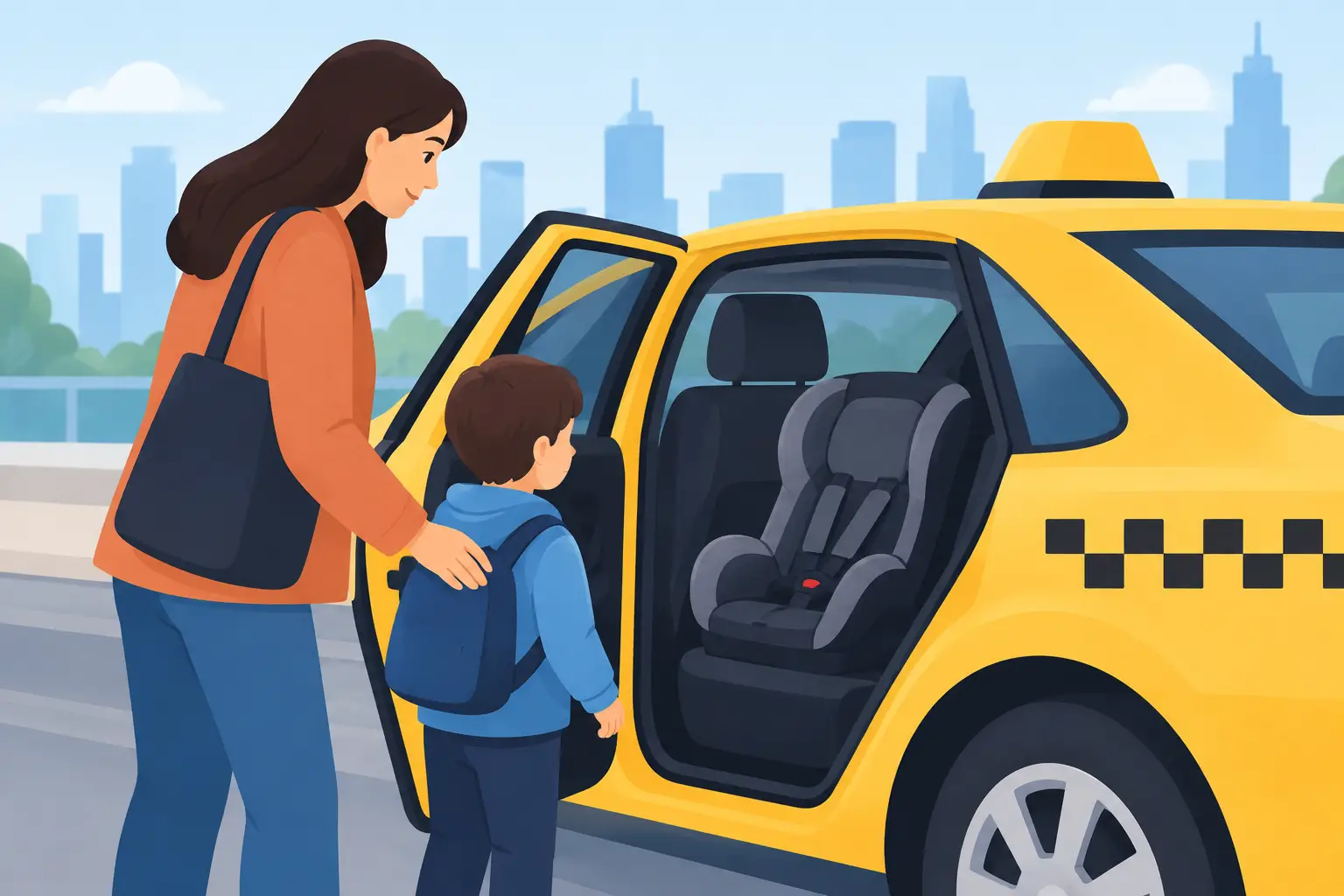
A 5am airport collection is not the moment to discover that a child seat will not fit the vehicle, or that the taxi does not supply one. So, can taxis carry child seats? Usually, yes – but whether a seat is provided, and whether it is suitable for your child, depends on the operator, vehicle and journey. The safest approach is to discuss it when you book.
For family trips from Buntingford and nearby villages, a little planning makes the journey calmer from the doorstep onwards. It also helps the driver arrive with the right vehicle, enough room for passengers and luggage, and a clear understanding of what your family needs.
Can taxis carry child seats in the UK?
Licensed taxis and private-hire vehicles can carry child seats, including seats supplied by the parent or, where offered, by the taxi company. However, there is no rule that every taxi must carry a child seat as standard. A seat may need to be requested in advance, and some providers may ask you to bring your own.
This is especially relevant for airport journeys. A rear-facing infant carrier, pushchair, hand luggage and several suitcases can take up more space than expected. A suitable estate car or minibus may be a far more comfortable choice than a standard saloon.
UK child car-seat rules contain limited exemptions for licensed taxis and private-hire vehicles. In broad terms, a child under three may travel without a child restraint only in the rear seat if one is not available. A child aged three or over, up to 135cm tall or 12 years old, may use an adult seat belt in the rear when a suitable child restraint is unavailable. These exemptions are not the same as a recommendation. A properly fitted, appropriate child seat remains the safer option whenever possible.
A child must never travel in a rear-facing child seat on a front passenger seat with an active front airbag. If a front-seat position is being considered, tell the driver beforehand so the arrangement can be checked safely.
Bringing your own child seat
For babies, toddlers and younger children, bringing your own familiar seat is often the simplest way to know it is right for your child. You know its history, its height and weight limits, and how it should be installed. It can also be useful at your destination, particularly if you are staying with family or collecting a hire car after a flight.
Before booking, check the seat’s fitting method. Many child seats use the vehicle’s three-point seat belt, while others rely on ISOFIX points. Not every private-hire vehicle will have accessible ISOFIX fittings in the position you need, and not every child seat is suitable for every vehicle. A belt-fitted seat is often more flexible for taxi travel, but always follow the manufacturer’s instructions.
Tell the operator the type of seat you plan to bring and the number of children travelling. This gives them the chance to allocate a vehicle with suitable rear-seat space and standard three-point belts. It is also worth allowing a few extra minutes at collection, particularly if you have not fitted that seat in the vehicle before.
Do not assume a driver can install the seat for you. Helpful drivers will do what they reasonably can, but the parent or carer should be comfortable checking that the seat is fitted securely and correctly. The final fit matters more than simply having a seat in the car.
Requesting a child seat from a taxi company
Some taxi companies can provide child seats for pre-booked journeys, subject to availability. If you need one, do not leave it in the general notes at the end of an online booking. Speak to the operator or make the request clearly before the journey is confirmed.
Give the child’s age, height and approximate weight, along with whether you need an infant carrier, toddler seat or booster seat. This information helps avoid the common mistake of booking a seat that is technically present but not appropriate for the child.
It is sensible to ask a few direct questions:
- Is a suitable child seat available for the date and time of travel?
- What type of seat will be supplied, and what are its height or weight limits?
- Will it be fitted using the seat belt or ISOFIX?
- Can the vehicle carry the seat, your passengers, pushchair and luggage comfortably?
A booster seat may work well for an older child, but it is not a substitute for an infant or toddler seat. Equally, a seat that was suitable last summer may no longer be right if your child has grown. Booking details should reflect the child travelling now, not the seat you happen to have used before.
Plan for airport journeys and return travel
Airport transfers need one extra conversation: what will happen to the child seat after drop-off? If you bring your own seat to Stansted Airport, you will normally take it into the terminal with you or check it for the flight. That may be straightforward with a lightweight booster, but less convenient with a bulky infant carrier and a pushchair.
For a return journey, make sure the child-seat request is recorded for both legs. Your outbound driver and return driver may not be using the same vehicle. Confirm the flight number, collection time and number of cases as well, particularly if you are travelling during school holidays or with a larger family group.
Families sometimes choose to take their own seat outbound and request a suitable seat for the homeward collection. Others book a larger vehicle so the seat can travel with them. Neither option is automatically best. It depends on your child’s age, your luggage, whether you need the seat at your destination and what the provider can guarantee.
What makes a family taxi journey safer?
A safe journey is not only about the child seat. Every passenger should have an available seat belt, children should travel in the rear wherever practical, and bags should be stored so they cannot move around the cabin. Avoid travelling with a child on an adult’s lap. It may feel convenient for a short local journey, but it does not provide proper protection in sudden braking or a collision.
If you are travelling with more than one child, ask about the rear seating layout. Three child restraints do not always fit side by side, even in a larger car. A minibus can offer welcome space for a family group, but you should still confirm the number and type of seat belts and where each child seat can be fitted.
Keep coats bulky enough to affect the harness off before securing younger children. The harness should sit snugly against ordinary clothing, with no twists. For older children in booster seats, make sure the diagonal belt rests across the shoulder rather than cutting across the neck, and that the lap belt lies low across the hips.
Book early and be specific
The more specific your booking, the easier it is to send the right vehicle. Include the collection address, journey time, passenger numbers, children’s ages, the seats you are bringing or requesting, and any pushchair or extra luggage. If the journey is time-sensitive, such as an airport departure, booking ahead also gives time to resolve questions rather than making a rushed decision on the day.
For a short local trip, a booster seat may be the only extra item you need. For a family holiday, a larger vehicle and a detailed conversation about car seats can make all the difference. At Buntingford Taxis, clear advance information helps us plan a comfortable vehicle and a reliable collection for the people travelling.
If you are unsure whether a particular seat will fit, ask before confirming the journey and keep the seat’s instructions to hand. A few minutes of preparation gives your child a safer place to sit and gives you one less thing to think about when the car arrives.
